Clean and Durable Exhaust Vents for Custom Homes
Have you ever looked at the outside of a house and seen a plastic dryer vent or a fragile piece of aluminum or sheet metal bent up and looking like a piece of junk? Well, I have. But I found exhaust vents today that we could put on this house. I want to show them to you, along with some other exhaust vent covers and intakes you can use for a custom home.
Intake Vent
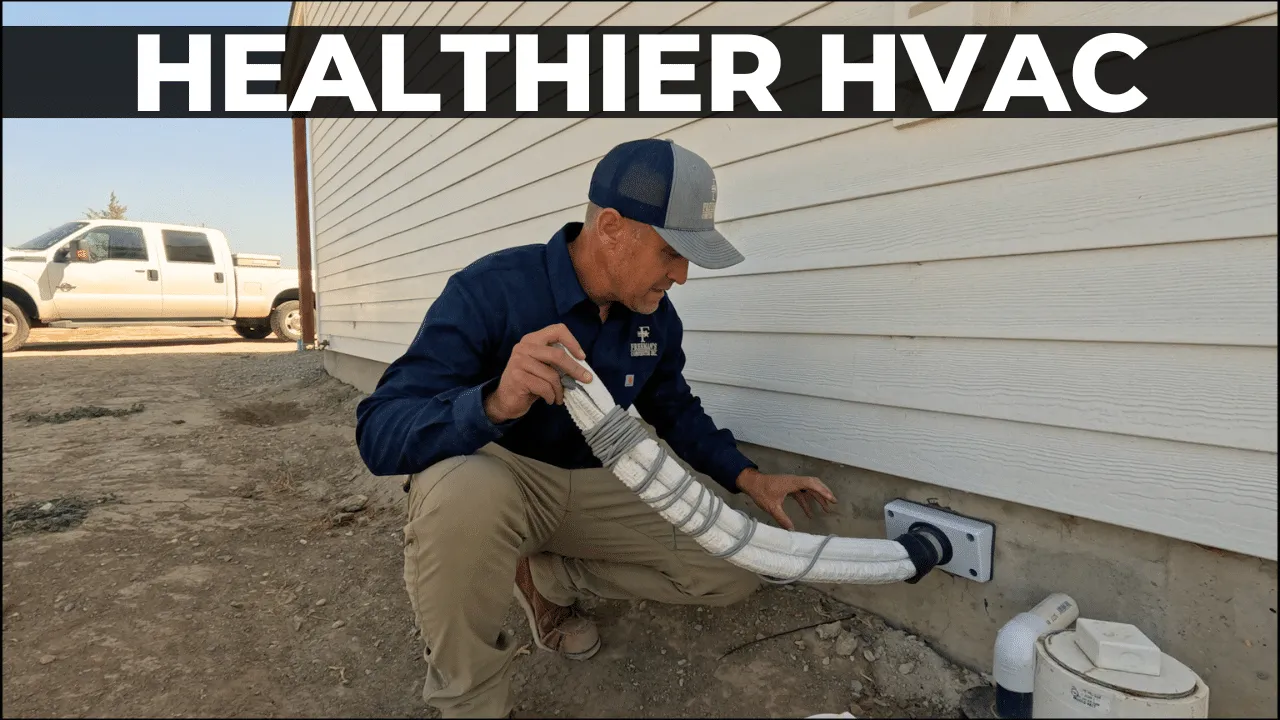
Right behind me is an intake vent. It’s a four-inch intake, and Innovate makes the product. I will pull it off and show you how it’s put together. It is 22-gauge Galvalume steel, and it’s powder-coated. These come in white, brown, and black.
The intakes are only four inches, but they have six-inch versions for exhaust vents. You can use those for stove exhausts. These are great for small intakes, maybe some makeup air and your four-inch ones are great for bath fans and dryer vents.

We Build CUSTOM HOMES, ADUS & Do HOME REMODELING.
Top Notch Quality Homes, on time, on budget, and without hassles.
Installation Process and Weatherproofing Details
The setup is slick. They slide into a four-inch duct. In this house, we used ZIP sheathing, and the rigid four-inch duct sticks out an inch and a quarter. That’s to account for a quarter-inch of rain screen and a five-quarter Hardie mounting block. We left it just a little short—about an inch and an eighth—and then this vent pushed right in.
Once everything is finished and waterproofed using ZIP liquid flash around the duct, you can add stretch tape if needed. Then, you push the vent in. If you want, you can caulk the top and both sides for a clean, sealed connection.
This particular vent is an intake. It has a padded magnet. I got this one on FreshVent.com, but you can also find them on BetterVenting.com. These magnets help reduce noise, and the material is soft enough that they don’t slap loudly in the wind.
They also have a quarter-inch mesh insert inside. You can see the two screws that allow you to open it up and replace the mesh if it ever gets damaged. Again, these come in white, black, and brown. And if you’re doing a larger project, you can order custom colors. The minimum is around 30 units.
These are easy to install. You push the vents in and caulk them on the top and sides, and that’s it.
Exhaust Vents, Kitchen Hood, and Final Touches
Over here, we had a bunch of penetrations grouped in the same area. We got one for the crawl space, a bath fan, another bath fan, and a dryer vent. These are all the same type—four-inch—and slide in just like the intake I showed you.
They also have a drip edge, and the flap opens when the fan runs. You’ll need at least 80 CFM to open the flap since it’s held shut with magnets of that same soft material. When we had powerful winds, we did hear a little flapping. So if you’re in a high wind area, use a stronger magnet or check your fan’s CFM. But otherwise, it’s a spotless, flat finish that will last.
This house will be white, so we picked white vents and we aren’t going to paint them. We’ll wait until after the painter is done. Then, we’ll caulk and install the vents. We might paint just the caulk joint on the side for a touch-up. You’ll also see screws at the bottom that let you add mesh inserts if needed. There are also fasteners on each side to hold the vent to the block—it’s not just press-fit and caulked.
Now, let’s look at the kitchen hood exhaust vent. This one is six inches—the same design as the others, just larger. It’s a tighter fit, but it pops right out. You can see the mesh inside, the magnets, and the fastener points. Depending on your kitchen hood, you’ll need more than 80 CFM to open this one—probably something like 200–400+ CFM.
We install these the same way. The duct is set back an eighth of an inch, so when we push the vent in, it hits the mounting block first and fits flush. Then, we caulk it in for a clean seal.
So you can see inside here a six-inch hole cut through the wall, and the duct hasn’t been connected inside yet. We’ve also installed head flashing above with a quarter-inch gap, which helps keep everything watertight.
Wrap-Up and Where to Buy
Alright, I hope you enjoyed this video and learned a little about these intake and exhaust vents by InOvate. You can find them on Amazon, FreshVent.com, DryerVent.com, or BetterVenting.com. It’s a great product.
If you’re building a custom home, ADU, or working on a whole-house remodel, reach out to us at FreemansConstruction.com. Take a look at our comprehensive collection of similar videos on our YouTube channel, The Real Property Show.